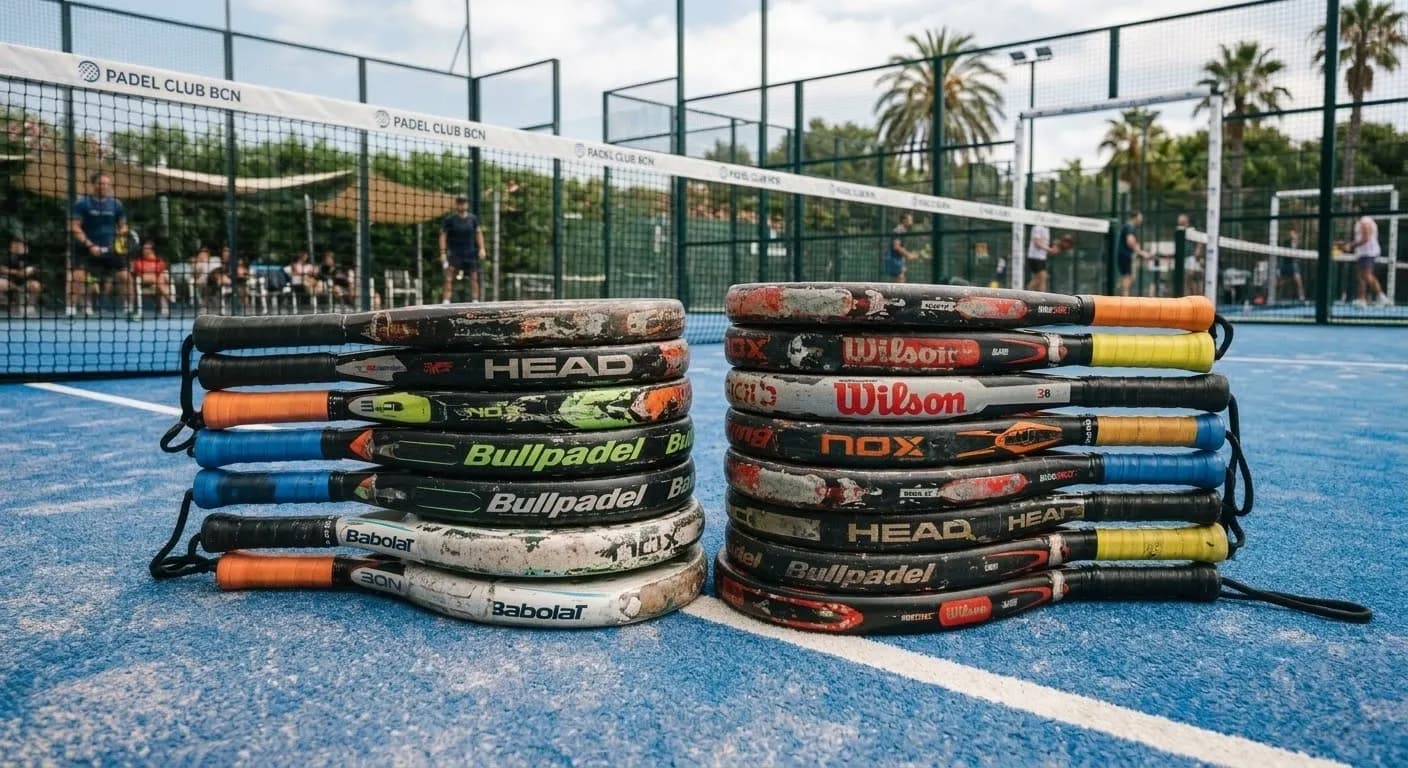
The Padel Racket Lifespan: A Data-Driven Look at When to Replace Yours
Ever wonder when your racket *really* dies? We crunched the numbers on racket lifespan, player buying habits, and why owning just one is a mistake.
Find your next racket today at the BestPadel Racket Finder!
The Unspoken Truth About Your Padel Racket
We all get attached to our padel racket. It becomes an extension of our arm, the trusty partner in countless epic rallies and hard-won matches. We clean it, we re-grip it, and we hope it will last forever. But here’s the hard truth, backed by data: your racket has an expiration date.
Performance isn't just about visible cracks; it’s about the unseen degradation of the materials that give you power and control. Ignoring this decline means you're not playing at your best. Let's dive into the science and statistics behind the life and death of a modern padel racket.
The Lifespan Myth: How Long Does a Racket Really Last?
While many players hope for years of loyal service, the reality is far shorter, especially for those who frequent the court. Our research shows a clear pattern:
- For the Regular Player (3+ times a week): You can typically expect your racket's peak performance to drop off after 8 to 14 months. After this period, the internal core begins to lose its properties.
- For the "Hard Hitter" (Aggressive, power-focused players): The timeline is even more condensed. The powerful smashes and viboras take a heavy toll on the EVA or FOAM core, often causing it to lose its rebound and "pop" in as little as 6 months.
Why does this happen? The core of a padel racket is made of a foam-like material designed for elasticity and power return. Every impact compresses and decompresses this core. Over thousands of hits, it loses its ability to spring back to its original shape, resulting in a "dead" feeling. You'll notice you have to swing harder to get the same power, control becomes less precise, and the sound of the ball impact changes from a crisp pop to a dull thud.
Decoding Player Choices: The Great Shape Shift
As players evolve, so do their equipment needs. The shape of a racket is the most critical factor influencing its playability, and our data reveals a fascinating trend in player preferences.
- The Foundation: Round Rackets. Nearly 45% of amateur players wisely prioritize control by choosing a "Round" shaped racket. These rackets have a large, centrally-located sweet spot and a low balance, making them forgiving, easy to handle, and perfect for developing solid technique.
- The Evolution: Teardrop Rackets. As players move into the intermediate levels, a massive shift occurs. About 35% of players transition to "Teardrop" (or hybrid) shapes. Why? They crave more versatility. A teardrop racket offers a fantastic blend of the control found in a round racket and the power offered by a diamond one. The sweet spot is higher, the balance is more even, and it allows for a more aggressive, all-court game without sacrificing too much defensive capability.
This progression is natural. Once you've mastered control, you start seeking ways to add more power and aggression to your game, and the teardrop shape is the perfect tool for that next step.
The Modern Padel Arsenal: Why One Racket Isn't Enough
Gone are the days of having a single, do-it-all racket. The modern padel enthusiast is more strategic, and the statistics prove it. The average enthusiast now owns 1.8 rackets. This isn't about vanity; it's about preparation and optimization.
Think of it this way:
- Your Main "Weapon": This is your go-to racket, perfectly suited to your play style and current skill level. It's the one you trust in a competitive match.
- The Backup/Secondary: The ".8" in our statistic represents the crucial second racket. This could be:
- An Older Model: Your previous main racket, which is familiar and perfect for practice sessions or as an emergency backup if a string breaks or the frame cracks mid-game.
- A Conditional Racket: Serious players often have a different racket for specific weather conditions. In cold, damp weather, the ball feels heavier, so a softer racket can provide more ball output and comfort. In hot, humid conditions, a harder racket can provide the necessary control as the ball becomes livelier.
- An Experimental Racket: A different shape or weight to test out new strategies or to use when you're working on a specific aspect of your game.
Having a backup isn't a luxury; it's a core part of being a prepared and competitive player.
Is It Time for an Upgrade? Find Your Next Perfect Racket
Understanding these statistics gives you a powerful advantage. You now know that your racket has a finite lifespan, that your needs will change as you improve, and that a single racket isn't enough to cover all your bases.
If you're noticing a drop in power, feeling more vibrations, or you're an intermediate player still using your first-ever round racket, it's time to consider an upgrade. But with hundreds of options on the market, how do you choose?
Save time: don't waste hours scrolling through endless product pages. Use our intelligent Racket Finder to discover your perfect match in minutes. Filter by skill level, shape, balance, price, and your favorite brands to see a curated list of rackets tailored specifically to your needs.
Your equipment is the single biggest factor you can control on the court. Make sure it's working for you, not against you.