Padel Racket Finder.

Find the perfect rackets matching your playing style

Not sure which padel racket is right for you? Our expert-designed racket finder analyzes your playing style, experience level, and preferences to recommend the best match from our selection of over 1000 detailed padel rackets from top brands at all price points.

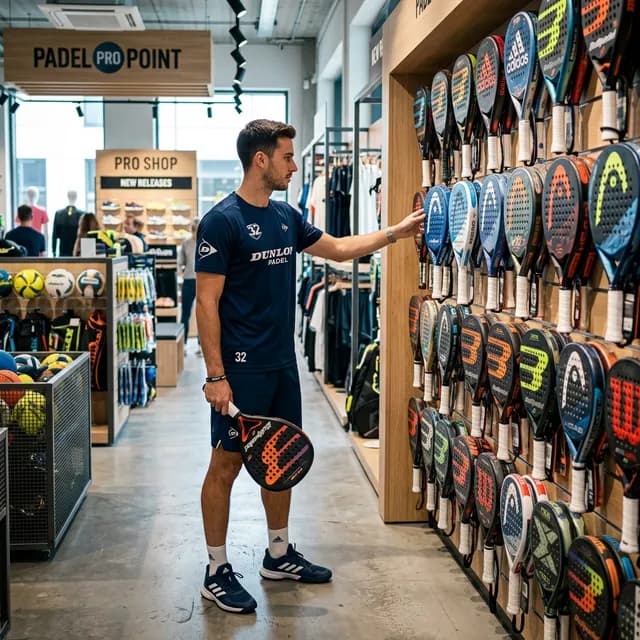
Beginner choosing a padel racket in a shop

Choosing the Right Padel Racket

Finding the perfect padel racket can be overwhelming, especially with so many varying shapes, materials, and balances available on the market. Whether you are a beginner stepping onto the court for the first time or an advanced player looking for that extra edge, your racket significantly influences your performance, comfort, and risk of injury.

Understanding Racket Shapes and Balance

Padel rackets generally fall into three main shape categories, each dictating a different balance and sweet spot:

  • Round Shape: Ideal for beginners and defensive players. These rackets have a low balance (weight closer to the handle) and a large, central sweet spot, offering maximum control and maneuverability.
  • Teardrop (Drop) Shape: The versatile middle ground. Designed for intermediate to advanced players seeking a balance between power and control. They feature a medium balance and a slightly higher sweet spot.
  • Diamond Shape: Built for power and aggressive play. Geared towards advanced and professional players, these rackets have a high balance (weight towards the head) and a smaller sweet spot located near the top.

How Long Does a Padel Racket Last?

A common question we receive is about the lifespan of a padel racket. According to our extensive testing and community feedback, a regular player (playing 2-3 times a week) can expect their racket to maintain optimal performance for about 6 to 12 months. The EVA or FOAM core inside the racket loses its elasticity over time with repeated impacts, reducing power output and shock absorption, even if the exterior looks pristine. Professional players often switch rackets every 2 to 4 weeks!

The Most Popular Padel Brands

The padel market is dominated by brands with deep roots in racket sports and specialized padel innovators. Some of the most popular and trusted brands include Babolat, Bullpadel, Head, Adidas, Nox, Siux, and Wilson. Each brand brings unique technologies to the table—from Bullpadel's customizable weight systems to Nox's renowned comfortable fiberglass faces.

Our Testing Methodology

At BestPadel, we don't just list specifications; we put them to the test. Our team of experienced players and coaches has tested hundreds of rackets on the court. We meticulously evaluate each racket for:

  • True maneuverability and weight distribution.
  • Power output on smashes and aggressive volleys.
  • Control and precision in defensive situations.
  • Comfort and vibration absorption (crucial for players with sensitive elbows).
  • Durability of the surface and frame.

This hands-on data is what powers our Racket Finder, ensuring the recommendations you receive are based on real-world performance, not just marketing claims. We have conveniently compiled all this detailed property data to offer a great selection perfectly matched to every player profile.

Frequently Asked Questions

What is the best padel racket for a beginner?
For beginners, a round-shaped racket with a low balance and fiberglass surface is ideal. It provides a large sweet spot and excellent maneuverability, making it easier to return the ball and learn proper technique without straining the arm.
Should I choose a heavy or light padel racket?
Lighter rackets (345-360g) offer better maneuverability and are great for beginners, women, and players prone to arm injuries. Heavier rackets (365-380g) generate more power but require better technique and strength to handle over a long match.
What is the difference between EVA and FOAM cores?
EVA rubber is harder and provides more durability, power, and control for players who hit hard. FOAM is softer, offering a greater 'trampoline effect' (ball output), more comfort, and better vibration absorption, which is great for sensitive elbows.
How do I know if my padel racket is dead?
A 'dead' racket will sound duller upon impact, vibrations traveling up your arm will noticeably increase, and you'll find it harder to generate power compared to when it was new. This happens because the internal core loses its elasticity.
Does the surface texture (spin) really matter?
Yes, a rough or textured surface helps grip the ball, allowing you to impart more spin (slice or topspin) on your shots. This is particularly useful for advanced players executing viboras or heavy bandejas.
Are carbon fiber rackets better than fiberglass?
Carbon fiber is stiffer, lighter, and more durable than fiberglass, providing more power and control for advanced players. Fiberglass is more flexible, offering better comfort and ball output, making it more forgiving and better for beginners and intermediate players.
What does 'sweet spot' mean in padel?
The sweet spot is the specific area on the racket face that provides the optimal combination of power, control, and comfort when striking the ball. Hitting outside this zone results in jarring vibrations and less effective shots.
How important is the overgrip in padel?
Extremely important. Overgrips adjust the handle thickness to fit your hand perfectly, absorb sweat to prevent slipping, and provide a comfortable feel. Players typically use 1 to 3 overgrips depending on their hand size.
Can playing with the wrong racket cause injuries?
Yes. Playing with a racket that is too heavy, has a high balance that you can't handle, or is too stiff (hard core/carbon face in cold weather) can significantly increase the risk of developing 'tennis elbow' (epicondylitis) or shoulder issues.
Why are some padel rackets so expensive?
Premium rackets use high-end materials like 12K or 18K carbon fiber, specialized multi-layered EVA cores, advanced aerodynamic frame designs, and built-in anti-vibration systems. These technologies enhance performance and durability, driving up the cost.