Development of Padel in the USA: a comprehensive analysis of market evolution capital deployment and professionalization
Explore the rise of padel in the USA, from its origins to its current boom. Discover how strategic investments and professionalization are shaping the sport's future, turning it into a high-yield asset class and redefining racquet sports.
Browse all Padel Clubs in the USA
The trajectory of padel in the United States represents one of the most sophisticated sporting migrations in modern history, transitioning from a localized curiosity in the early 1990s to a capital-intensive, institutionalized industry by 2026. Unlike the grassroots, low-barrier expansion of pickleball, the development of padel has been defined by a "top-down" economic model, characterized by high-end real estate integration, elite professional leagues, and a significant influx of institutional capital [1]. As the sport moves toward mainstream status, it is increasingly viewed by private equity and real estate developers not merely as a recreational activity, but as a high-yield asset class with the potential to redefine the American racquet sports landscape.
Historical Genesis: The Accidental Invention and the Houstonian Beachhead
The historical framework of padel is rooted in the spatial constraints of the Mexican elite during the late 1960s. In 1969, Enrique Corcuera, a businessman in Acapulco, sought to establish a racquet sports facility at his holiday home [3]. Due to the limited dimensions of his property and the surrounding vegetation that frequently interrupted traditional play, Corcuera constructed a court that integrated walls as part of the field of play, essentially hybridizing tennis and squash. This "Paddle Corcuera" was initially a private pastime for the social circle of the Mexican elite until it was exported to Spain in 1974 by Alfonso de Hohenlohe, who established the first European courts at the Marbella Club [3].
The American introduction began in 1993, driven by a strategic business partnership between Felipe Arnold, an Argentine entrepreneur, and Ed Thompson, a Houston-based businessman [5]. Recognizing the sport's massive growth in South America, the duo targeted The Houstonian Club as the site for the country’s first court [5]. Before the first court was even constructed, Arnold and Thompson recruited a group of local tennis professionals, including Peter Farrell, Mike May, and Scott Read, to represent the inaugural Team USA at the 1993 Tri-National Cup in Acapulco [5]. Because Houston lacked a dedicated facility at the time, these early pioneers were forced to train on tennis and racquetball courts to adapt to the solid, perforated rackets used in padel [5].
Key Milestones in U.S. Padel History
| Event | Date | Location | Key Significance |
|---|---|---|---|
| Invention of Padel | 1969 | Acapulco, Mexico | Established the wall-integrated ruleset [3]. |
| Founding of US Padel Association (USPA) | 1993 | Chattanooga, TN | Established domestic regulatory framework [7]. |
| First U.S. Padel Court | 1994 | Houston, TX | Constructed at The Houstonian Club [5]. |
| First U.S. International Tournament | 2022 | Las Vegas, NV | Senior World Championships [6]. |
| 1,000th U.S. Padel Court Milestone | April 1, 2026 | Miami, FL | Milestone court opened at Thesis Hotel Coral Gables. |
The installation of the first glass and steel court at The Houstonian Club in early 1994, which was relocated from the beaches of the Hotel Acapulco Plaza, marked the beginning of padel’s physical footprint in the United States [5]. Despite this early start, the sport remained a niche endeavor for nearly three decades until the current acceleration (2024–2026), driven by post-pandemic health trends and a strategic professionalization effort led by the United States Padel Association (USPA) [1].
Quantitative Analysis: Statistical Mapping of the American Boom
The statistical profile of padel in the United States has undergone a dramatic shift from a slow-growth model to an exponential one. By the second quarter of 2025, the number of active players surpassed 112,000, while the professional tier of the sport saw its ranks swell to nearly 2,000 licensed players. Infrastructure growth reached a critical milestone on April 1, 2026, when the United States officially opened its 1,000th padel court.
According to the latest directory data from BestPadel Padel directory, there are now 322 active padel clubs across the United States as of March 2026 [20]. At BestPadel, experts are assisting to this exponential growth and anticipate a development trajectory similar to the rapid ascent observed in Indonesia, where specialized facilities have scaled with unprecedented speed [13][20]. This represents a robust 50% year-over-year increase in club density, confirming that the U.S. is entering its most aggressive expansion phase to date [20].
Geographic Concentration and Regional Hotspots
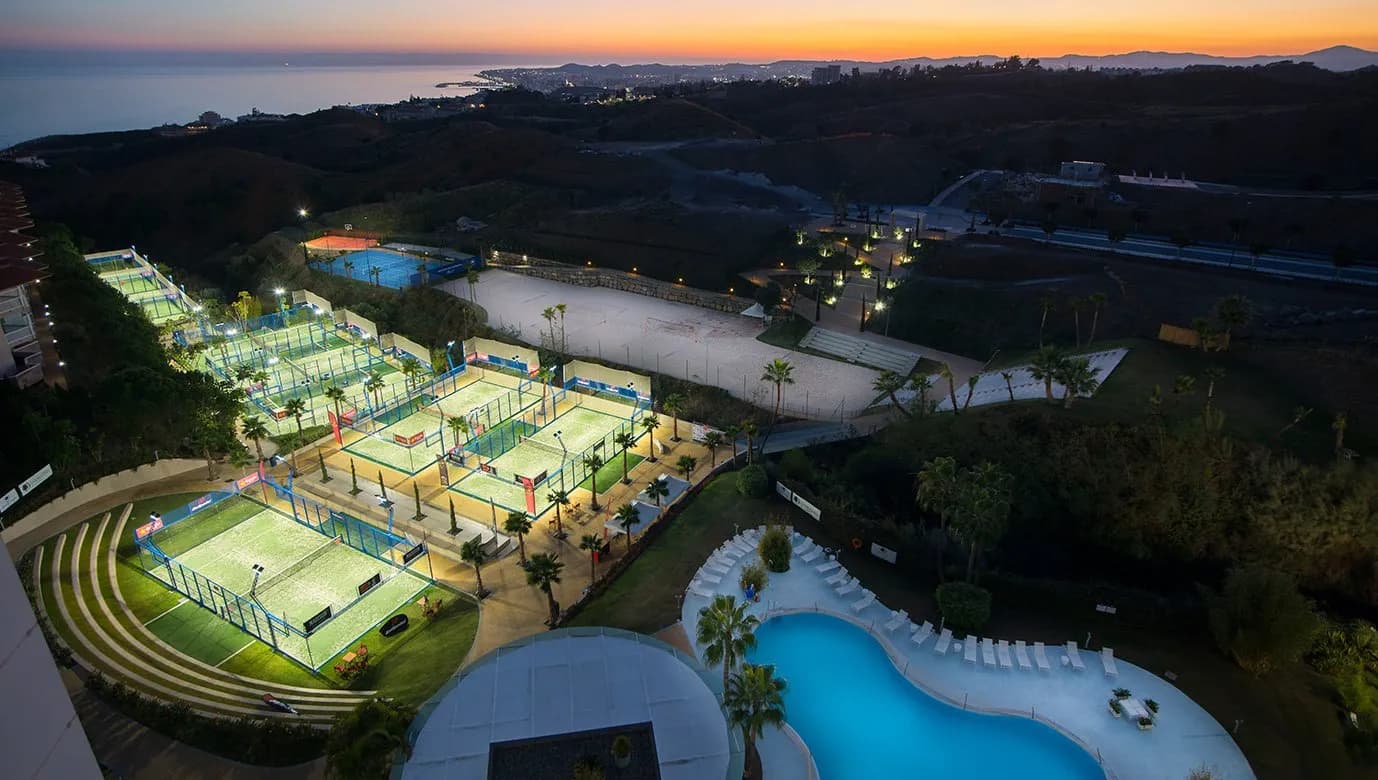
The expansion of padel is heavily weighted toward specific geographic clusters where climate, wealth, and existing social networks favor high-end club development. Florida remains the undisputed leader, accounting for approximately 41% of the nation’s padel infrastructure [9].
| State | Market Share (%) | Growth Driver |
|---|---|---|
| Florida | 41% | Latin American cultural ties; year-round outdoor play [9]. |
| Texas | 18% | Deep historical roots; established tennis culture [1]. |
| California | 10% | Celebrity endorsement; wellness-driven lifestyle markets [1]. |
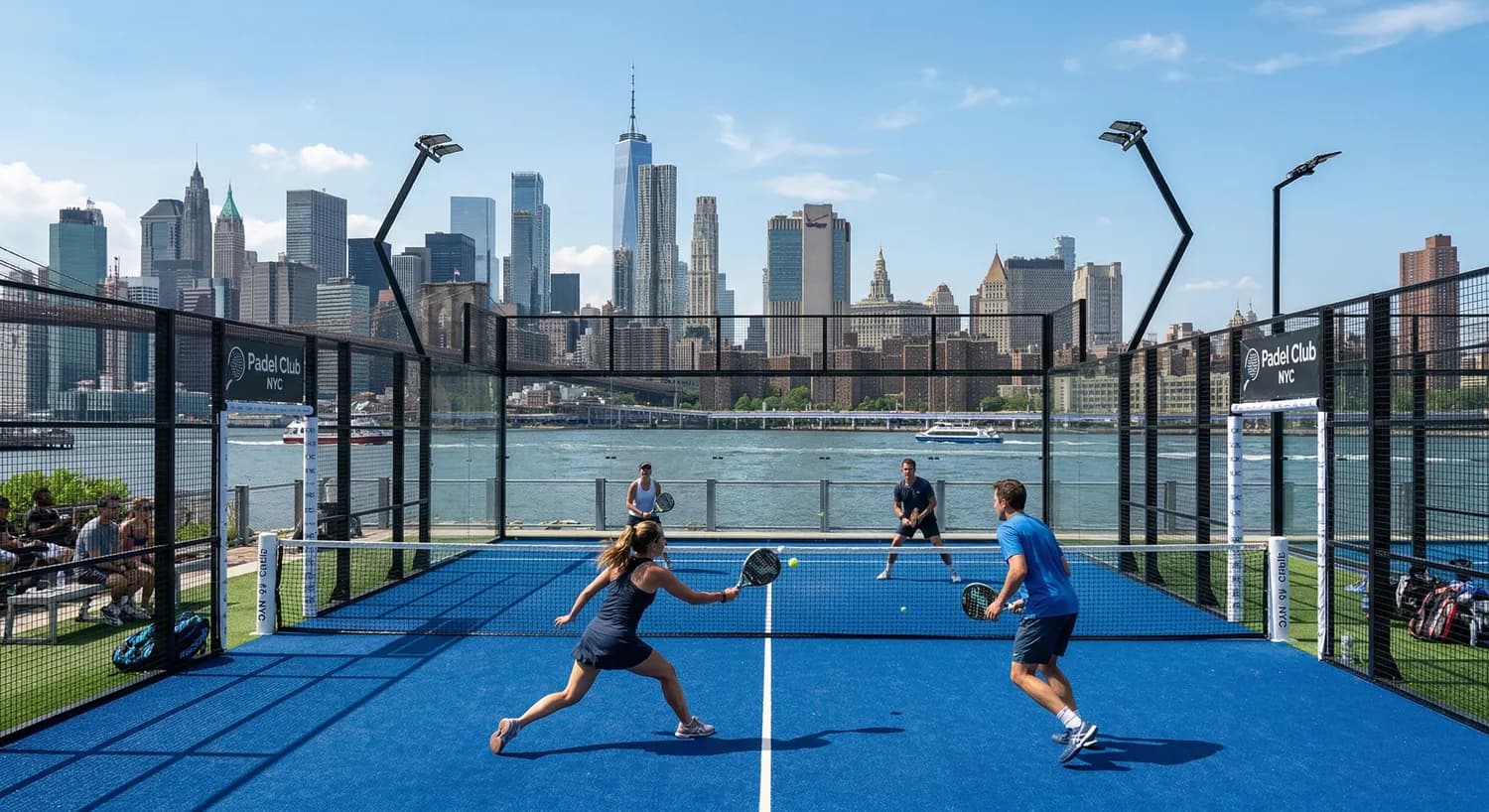
| New York | 4.7% | Premium indoor club models; high-density urban demand [1]. |
| Arizona | Emerging | Rapid franchise expansion (Conquer Padel) [10]. |
The concentration in Florida is not merely cultural; it is increasingly professional. By early 2025, Florida boasted 56 clubs and 268 courts, a figure that continues to grow as large-scale residential projects integrate padel as a primary amenity [9]. Meanwhile, the Northeast and Midwest are seeing a surge in indoor facilities, with 39.1% of all U.S. courts now being indoor to mitigate seasonal limitations [1].
Professional Structure: Leagues, Governance, and the Franchise Model
The professionalization of padel in the United States is structured around three primary pillars: the USPA as the national governing body, the Pro Padel League (PPL) as the flagship professional competition, and emerging amateur networks like the National Padel League (NPL) [8][11].
The Pro Padel League (PPL) and the Series A Breakthrough
Launched in 2023, the Pro Padel League (PPL) is North America’s premier professional padel league, utilizing a franchise-based model. In March 2026, the league announced the closing of a $15 million Series A funding round led by Rick Schnall, co-chairman of the Charlotte Hornets. This institutional capital is being deployed to scale league infrastructure, expand media rights, and formalize player development [2][14].
The PPL currently operates with 10 franchises across the U.S., Canada, and Mexico [13]. Several teams have reached valuations exceeding $10 million, with the Los Angeles Beat recently changing hands for that amount [14]. The 2026 season will culminate in "The City’s Cup Finals," hosted in Miami from December 3–6 [15].
The Economics of Padel: Investment, Real Estate, and Franchise Fees
The economic engine of U.S. padel is fueled by a mix of private equity and real estate-driven club development.
Construction and Startup CAPEX
A standard two-court facility requires an initial capital expenditure of approximately $560,000, with a projected breakeven point of 14 months [16].
| CAPEX Category | Estimated Cost | Percentage of Initial Investment |
|---|---|---|
| Court Construction (2 Units) | $300,000 | ~54% [16]. |
| Facility Renovation / Build-out | $100,000 | ~18% [16]. |
| Retail & F&B Areas | $50,000 | ~9% [16]. |
| HVAC & Infrastructure | $40,000 | ~7% [16]. |
| Working Capital / Inventory | $25,000 | ~4% [16]. |
The national average hourly rate for court rental is $100 for indoor peak time and $80 for outdoor peak time [1]. However, in high-demand markets like New York City, peak court rental rates at clubs like Padel Haus have reached $250 per hour [24].
Public Figures and the Celebrity Capital Wave
The visibility of padel in the U.S. has been amplified by celebrity and athlete investors who are actively shaping the ownership groups of professional teams and clubs.
Major Celebrity / Athlete Investors
| Investor | Affiliation | Role / Investment |
|---|---|---|
| Rick Schnall | Charlotte Hornets | PPL Series A Lead Investor. |
| Lionel Messi | Inter Miami / Argentina | KRÜ Padel Co-Owner [18]. |
| Sergio "Kun" Aguero | Argentina Legend | KRÜ Padel Co-Owner/Lead Developer [18]. |
| Nacho Figueras | Polo Icon | Florida Goats Investor (Palm Beach). |
| Francis Tiafoe | ATP Tennis | New York Atlantics Investor [12]. |
| Daddy Yankee | Reggaeton Superstar | Orlando Flowrida Goats Owner. |
| Drew Brees | NFL Legend | Pickle N Pins Co-Founder [19]. |
Recent Announcements and the 2026 Competitive Calendar
The 2026 calendar represents a significant expansion for both international tours and domestic leagues.
Premier Padel and the Miami P1
The Miami Premier Padel P1, set for March 23–29, 2026, is one of the centerpiece events of the Qatar Airways Premier Padel Tour. Hosted at the Miami Beach Convention Center, the tournament features the world’s highest-ranked players and implements the new “Star Point” scoring system to balance tradition with broadcast appeal [21][22].
Milestone and Activation Highlights
- 1,000th Court Milestone: America built its 1000th padel court on April 1, 2026, located at the Thesis Hotel in Coral Gables, Miami [4].
- BestPadel Directory Growth: The U.S. directory now includes 322 clubs, assisted by a 50% YoY growth rate [20].
- Padel Up Indio Activation: A month-long padel activation in Indio during Coachella and Stagecoach (April 2026) [17].
- FIP Beyond Launch: A new global circuit dedicated to amateur players set to launch in April 2026 [23].