Padel Racket Dictionary
Understanding racket specifications is key to finding your perfect match. Here is everything you need to know about how padel rackets are built and how they perform.
Main Specifications
Weight#
Weight greatly impacts maneuverability, power generation, and injury risk.
Offers supreme maneuverability and control, ideal for beginners, juniors, or players prone to arm fatigue.
The sweet spot for most adult players, providing a harmonious balance of power and shot stability.
Maximizes shot power and impact stability but demands strength and technique; suited for advanced players.
Shape#
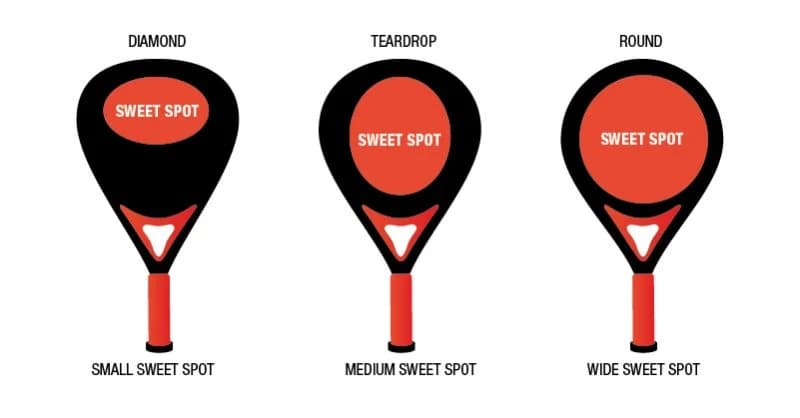
The racket head shape determines sweet spot size, location, and weight distribution—key for playstyle suitability.
- Round
Large, centralized sweet spot with low balance. The ultimate shape for control and forgiveness, perfect for defensive players and beginners.
- Teardrop
A versatile middle ground, balancing power and control with a medium sweet spot. Ideal for all-round players mixing offense and defense.
- Diamond
High balance with a sweet spot near the head’s top. Engineered for powerful smashes and maximum leverage. Best for aggressive, experienced players.
- Hybrid
A modern blend (often Round/Teardrop or Teardrop/Diamond) combining expansive sweet spots and enhanced power.
Balance#
Weight distribution measured from the handle’s base affects feel and play characteristics.
- LowWeight near the handle. Produces lighter, quicker swings ideal for fast reaction volleys and reducing injury.
- MediumEvenly centered weight, offering a neutral feel adaptable to varied shots and playing styles.
- HighWeight concentrated near the head. Boosts swing momentum and power but may increase wrist strain.
Player Type#
Rackets are segmented based on the user’s skill and style requirements.
- BeginnerEmphasize control, lightweight frames, and softer materials (like fiberglass) to ease learning and maximize comfort.
- IntermediateBalanced specs incorporating carbon fiber for added stability while maintaining an accessible sweet spot.
- AdvancedSpecialized shapes (Teardrop or Diamond) and stiffer constructions optimize for players with refined styles and technique.
- CompetitionTop-tier performance rackets, often heavier and harder, crafted for skilled players demanding maximum output.
Construction & Materials
Frame Profile#
Standard adult racket thickness is 38 mm, balancing aerodynamics with sturdiness; juniors’ frames are thinner (33–36 mm) for weight savings.
Frame Material#
The frame forms the racket’s structural core.
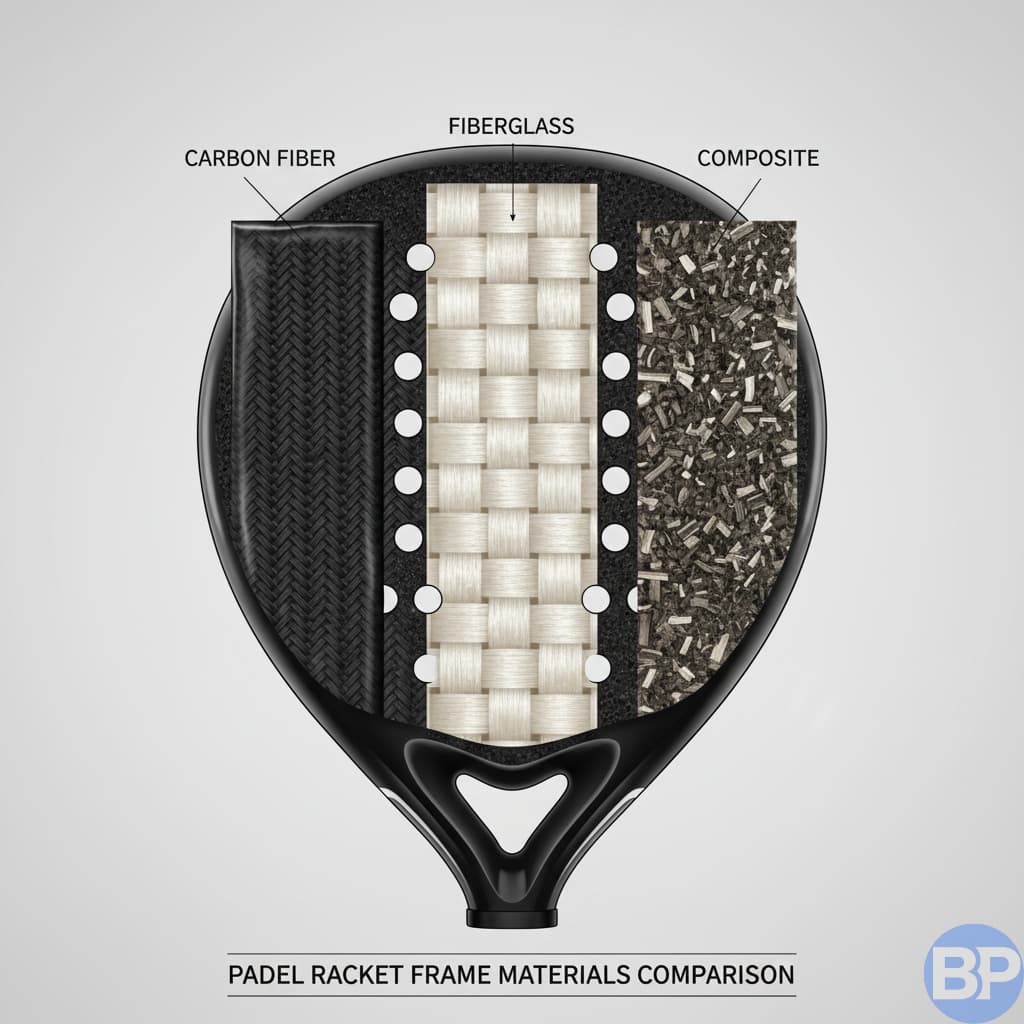
- Carbon Fiber: Rigid, lightweight, and durable, preventing twisting impacts and heightening power transfer.
- Fiberglass: Flexible and more affordable, offering a softer, more forgiving feel but less durability.
- Composite: Material blends designed to optimize cost-performance balance.
Surface Material#
The "face" material governs ball feel and power delivery.
Carbon Fiber (3K, 12K, 18K)
The "K" indicates thread density; higher K means tighter weave, usually resulting in stiffer surfaces offering greater power and durability, at the cost of comfort.
Fiberglass
Soft and elastic, creating a trampoline effect that boosts power on slow shots and enlarges the sweet spot; however, it provides less precision on fast smashes.
Surface Texture#
- SmoothStandard finish; guarantees consistent ball exit speed with less grip.
- Rough / TexturedSandpaper-like or embossed 3D patterns increase friction, “biting” the ball to enhance spin on slices and topspin shots.
Core Material#
The core determines feel, hardness, and energy return.
Durable with high memory (returns quickly to shape).
- Hard EVA: Power & Control
- Soft EVA: Comfort & Ball Output
Soft and porous, excellent at vibration absorption – ideal for those with arm injuries but with less raw power.
Hybrid layering providing adaptive response—soft for slow shots, hard for fast shots.
Performance Chart Explained
Our proprietary spider chart scores are calculated using over 10 technical data points per racket.
Power#
Measures how effectively a racket accelerates the ball on attacking shots like smashes and volleys. High scores correlate with Diamond shapes, high balance, and stiff frame/surface materials that optimize energy transfer.
Control#
Represents shot precision and placement ease.
Soft core promotes forgiveness through vibration absorption and longer dwell time.
Hard core gives immediate tactile feedback and precision, enabling sharp, predictable volleys.
Spin#
Indicates the racket’s ability to impart ball rotation, heavily influenced by rough surface textures and grippy carbon fiber surfaces.
Difficulty#
How challenging the racket is to wield effectively.
- High Score: Small sweet spot, stiff, and heavy models best suited for precise advanced techniques.
- Low Score: Forgiving rackets with larger sweet spots easier for beginners.
Durability#
Estimate of racket lifespan, mainly driven by higher-grade materials such as 18K Carbon outperforming fiberglass in impact resistance and longevity.
Price/Performance Ratio#
Balances premium specs against cost. Higher scores imply that you get top-tier features at a competitive price, helping users make budget-conscious decisions without sacrificing quality.