Padel vs Squash: Gameplay, Fitness & Strategy Deep Dive
Curious about the real differences between padel and squash? We break down court specifics, equipment, gameplay strategies, and fitness benefits for both racket sports.
Introduction: Two Wall-Play Wonders, Distinct Experiences
Padel and squash both offer exhilarating, fast-paced action within four walls, making them attractive to racket sport enthusiasts. However, despite these superficial similarities, they are fundamentally different sports, each demanding unique skills, strategies, and physical attributes. For padel players, whether you're a beginner just getting hooked or a seasoned competitor looking to diversify your game, understanding these distinctions is crucial.
This article dives deep into a head-to-head comparison of padel and squash, dissecting their court dynamics, equipment, gameplay nuances, and fitness demands. By the end, you'll have a clear picture of what sets these two incredible sports apart, helping you appreciate the unique challenges and rewards of each.
The Battleground: Court Differences and Their Impact
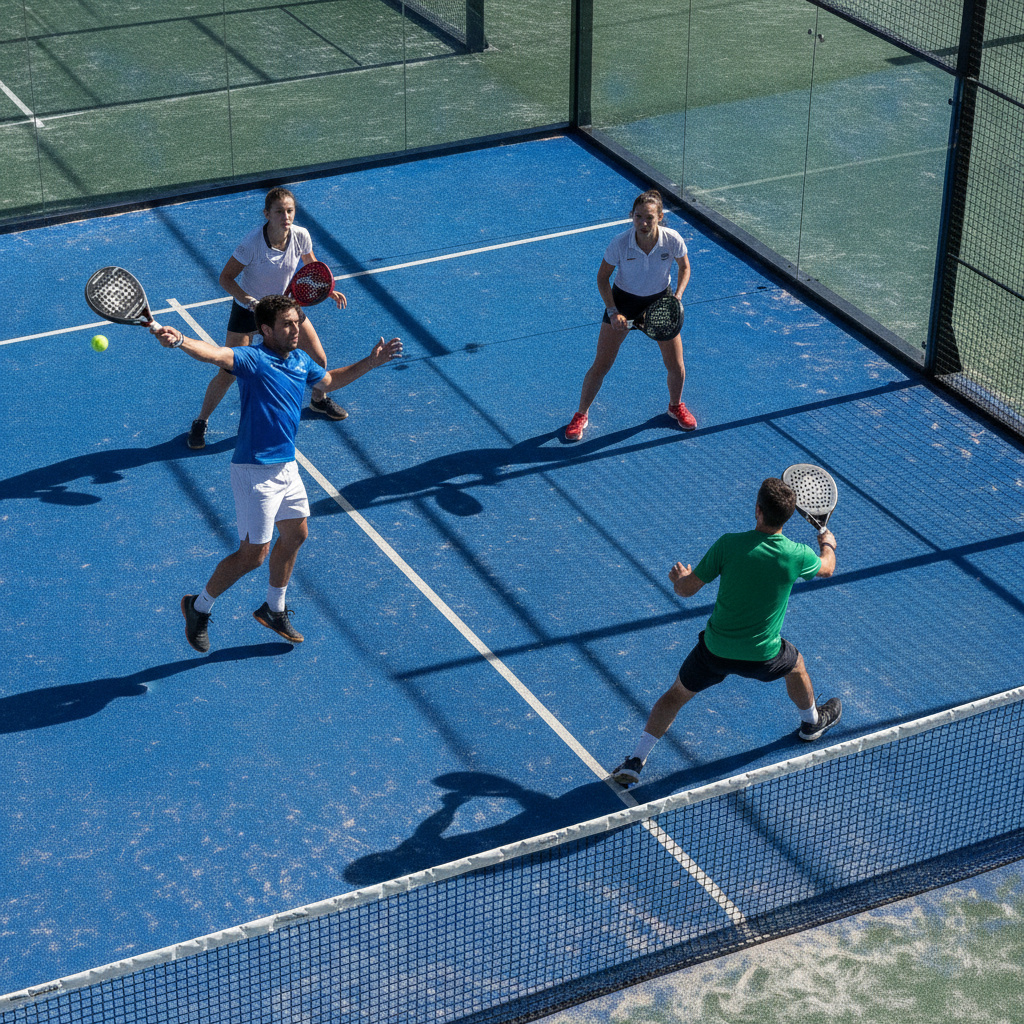
The most immediate difference lies in the playing environment. A padel court is smaller than a tennis court but larger than a squash court, typically 10m wide by 20m long. It features glass walls at the back and part of the sides, with wire mesh completing the enclosure. A net divides the court, and players serve underhand into a diagonally opposite service box. Crucially, padel is almost exclusively played in doubles, meaning four players share this space.
Squash courts, in contrast, are much more compact, measuring 9.75m long by 6.4m wide. They are fully enclosed by four solid walls (though some modern courts feature glass back walls for spectators), with specific lines marking the service box, short line, and cut line. Squash is predominantly a singles sport, meaning two players occupy this intense, confined space. The solid walls dictate a different ball rebound, often faster and more direct, compared to the springier, more forgiving bounce off padel's glass.
Your Tools of the Trade: Equipment Breakdown
The rackets and balls used in each sport are uniquely adapted to their respective gameplay styles:
- Padel Racket (Pala): These are solid, stringless rackets with a perforated surface (to reduce air resistance) and a short handle. They often have a wrist strap for safety. The weight and balance vary, allowing players to choose between control, power, or a hybrid style.
- Squash Racket: These are strung rackets, similar in appearance to a smaller tennis racket but with a longer handle and smaller head. They are designed for precision and generating significant power through string tension.
- Padel Ball: Similar in appearance to a tennis ball but with slightly lower internal pressure, resulting in a softer, less bouncy feel. This contributes to longer rallies and allows for more controlled play off the walls.
- Squash Ball: Made of rubber, these balls have very little bounce when cold. They need to be warmed up through play to achieve their optimal bounce. Different coloured dots indicate varying bounce levels, catering to different skill levels.
The Art of the Rally: Gameplay & Strategy
Padel Gameplay
Padel is a strategic game of positioning and teamwork. With four players, communication is key. The walls are not just boundaries; they are integral to play. Players often let the ball bounce off the glass back wall before returning it, creating opportunities for defensive lobs or offensive volleys. The serve is underhand, making it less of a weapon and more of a rally starter.
Key padel shots like the bandeja (a slicing overhead shot that keeps the ball low after hitting the back wall) and the vibora (a more aggressive, spinning overhead) are designed to control the opponent's position and prevent them from reaching the net. Net play, volleys, and precise lobs are paramount. The game is less about raw power and more about tactical placement and patience.
Squash Gameplay
Squash is an intense, individual battle of athleticism and precision. The goal is to hit the ball against the front wall, above the 'tin' and below the out line, in such a way that your opponent cannot make a legal return. The serve is typically high and deep, aiming to pin the opponent in the back corner. Power and accuracy are highly valued.
Players frequently use angles off all four walls to create unreturnable shots, such as drops (soft shots to the front corner), boasts (hitting side walls before the front wall), and cross-courts. A core strategy is 'ghosting', where players always return to the 'T' (the intersection of the half-court line and the short line) after each shot, ready to cover the entire court. The constant movement and rapid changes of direction make it a relentless physical challenge.
The Fitness Factor: A Head-to-Head Workout
Both sports are fantastic for fitness, but they challenge your body in different ways:
Cardiovascular Endurance: Squash is often cited as one of the most demanding racket sports for cardiovascular fitness. The small court and continuous, high-intensity movement (sprinting, lunging, quick changes of direction) mean your heart rate stays elevated for extended periods. Padel also provides an excellent cardio workout, but it's more characterized by explosive bursts, quick lateral movements, and short sprints, with brief recovery periods between points and during rallies when waiting for partners.
> >
Muscular Engagement: Both sports engage the legs, core, and arms. Squash heavily relies on powerful leg drives for lunges and sprints, strong core rotation for powerful strokes, and arm strength for racket control. Padel emphasizes quick pushes off the ground for lateral movement, strong core engagement for stability during volleys and overheads (like the smash), and shoulder/arm endurance for repetitive volleys and bandejas.
> >
Injury Risk: Squash's constant high-impact movements can put stress on knees, ankles, and Achilles tendons. Padel, while still dynamic, generally involves less direct impact on joints due to its more lateral movement and softer court surfaces, though shoulder and elbow issues can arise from repetitive striking.
Learning Curve & Accessibility
For many, padel offers a more accessible entry point into racket sports. The underhand serve is easier to master, the smaller court for doubles means less ground to cover individually, and the use of walls makes returning the ball simpler initially. Beginners can enjoy rallies quickly, focusing on basic technique and tactical positioning. The social aspect of playing in doubles also makes it very welcoming.
Squash, conversely, can have a steeper learning curve. The ball's low bounce requires precise hitting and quick reflexes from the start. The constant, intense movement can be physically demanding for beginners, and mastering the intricate angles off the walls takes considerable practice. While rewarding, it often requires a higher initial commitment to reach a comfortable playing level.
Which Racket Sport Is For You?
Ultimately, the choice between padel and squash depends on your preferences and goals:
- Choose Padel if: You enjoy teamwork, strategic rallies that involve using the walls creatively, a highly social atmosphere, and a workout that combines explosive sprints with tactical finesse. It's often easier to pick up and enjoy with friends.
- Choose Squash if: You crave an intense, continuous cardiovascular workout, a relentless individual challenge, powerful striking, and a game that demands extreme precision and agility across a smaller, enclosed space.
Many players even enjoy both, appreciating the distinct benefits each sport offers.
Conclusion: Embrace the Racket Sports World
While padel and squash both offer the thrill of racket sports played within walls, their unique characteristics carve out distinct experiences. Padel, with its emphasis on doubles, strategic wall play, and social interaction, provides an accessible yet deeply tactical game. Squash, on the other hand, stands out for its relentless physical demands, individual intensity, and precision-based shot-making.
Whether you're drawn to the camaraderie and nuanced tactics of padel or the high-octane, continuous challenge of squash, both sports promise fantastic fitness benefits and endless hours of enjoyment. If you're a dedicated padel player, consider trying squash for a different type of workout and skill challenge, and vice-versa. You might just discover a new passion or deepen your appreciation for your current favourite.
Find the best padel clubs near you
BestPadel is the world's largest padel club directory. Search over 50,000 clubs in 100+ countries and book your next game.