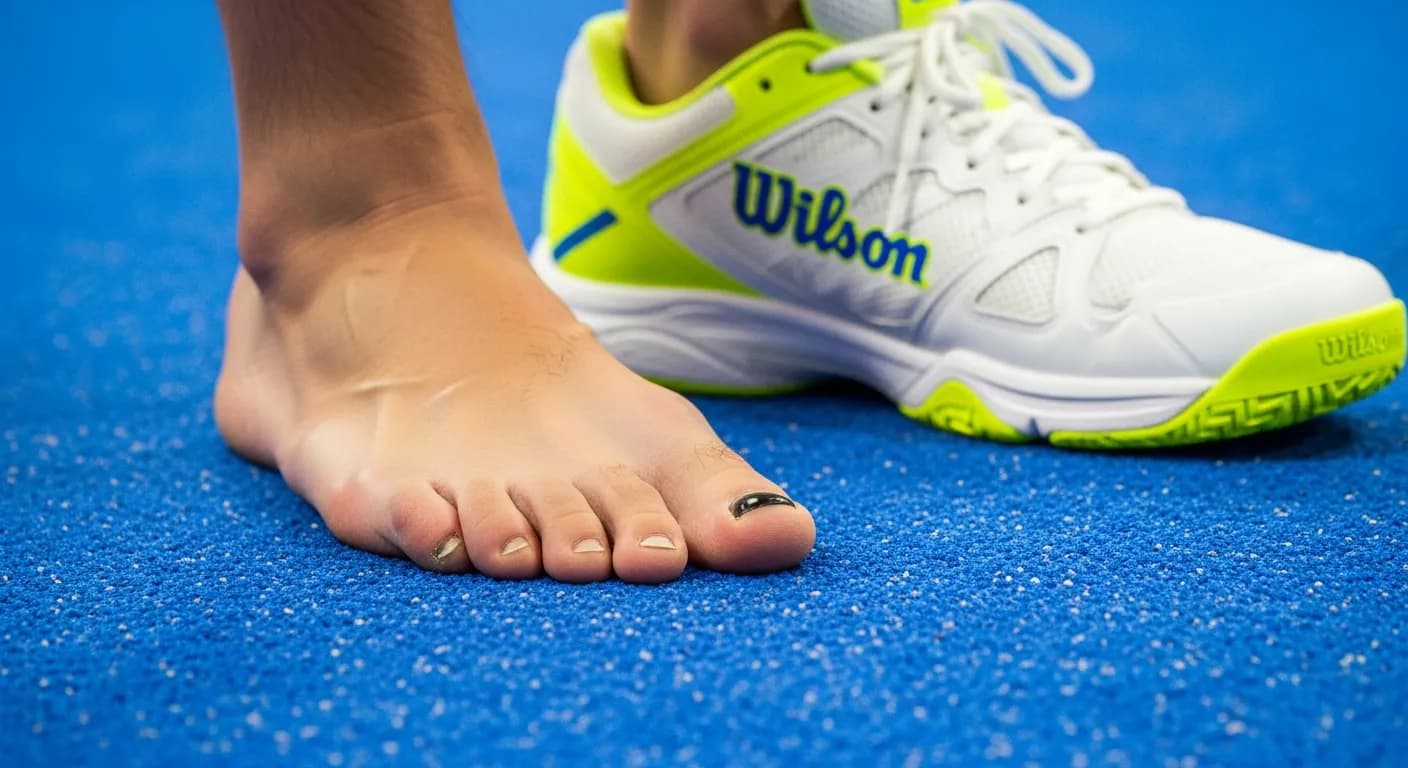
Padel Toe Injuries: Why Your Black Toenails Hurt (And How to Stop It)
Black toenails from padel are common, often called "runner's toe." Repetitive pressure from sudden stops and shoe fit issues cause blood to pool under the nail. Learn how to prevent padel toe injuries with proper shoe sizing, lacing techniques, and nail trimming.
Toenail damage from padel is remarkably common—it is essentially the padel version of “runner’s toe.” Whether your nails are turning black, bruising, or (worst case) falling off entirely, the culprit is almost always the same: your foot slamming into the front of your shoe during high-intensity play [1].
How Common Is This, Really?
While we are still waiting on massive epidemiology studies specific to padel toenails, we can draw strong parallels from similar high-impact sports. Here is how padel stacks up against the "usual suspects" of foot trauma:
Sport Comparison Table
| Sport | Typical Toenail Issue | Prevalence & Data |
|---|---|---|
| Padel | Runner’s toe / black toenails [1] | Consistently cited in injury guides; high incidence due to court glass braking [1]. |
| Running | Subungual hematoma (blood under nail) [6] | ~25% of trail runners reported nail injuries in the last year [2]. |
| Football | Forefoot/toe overload from stud patterns [4] | High mechanical stress on toes; often masked by other lower-limb injuries [4]. |
If you play padel with explosive lunges, sudden stops, and pivots in shoes that are a bit too snug, you’re effectively giving yourself “runner’s toe” and “football boot toe” at the exact same time [5].
What’s Actually Happening to the Nails?
Most "padel toes" are clinically known as subungual hematomas—a fancy way of saying blood and fluid are trapped under the nail.
- The Mechanism: Repetitive pressure causes the nail to lift slightly, tearing tiny blood vessels. This creates a pool of blood that looks red or black and often feels like it’s "throbbing" [6].
- The Cause: Sudden stops and direction changes force the toes to hit the front or top of the shoe [6].
- The Outcome: If the pressure is chronic, the nail may crack, deform, or eventually fall off. While a new nail will grow back, it can remain thickened or misshapen for months [3].
Padel is almost perfectly designed to cause this. Between the small court size, sharp brakes at the glass, and constant micro-steps, your toes are under a relentless barrage [7].
Main Causes in Padel
- Short or Narrow Shoes: Decelerating or jamming your foot against the glass to brake forces toes into a hard, low toe box [6].
- Forefoot Sliding: If your heel isn’t locked, your foot moves forward inside the shoe. Even "correct" sizes can fail if the midfoot or heel is too loose [3].
- Hard Braking: Movements mimicking "downhill" running—like quick back-and-forth sprints—are classically linked to black nails [2].
- Fatigue & Volume: Higher weekly "mileage" increases risk [8]. Fatigued legs lead to sloppy footwork, which means more sliding and toe-banging.
- Worn-out Gear: Shoes older than 4–6 months lose their cushioning and upper structural integrity, providing less protection for your toes [8].
Practical Remedies and Prevention
You don't have to sacrifice your nails for the love of the game. Here is how to keep them intact:
- Size Up for Success: Aim for a thumb’s width of space in front of your longest toe. Ensure the toe box has enough height so the nail isn't rubbing against the top [1].
- The "Runner's Loop": Use the extra eyelet at the top of your shoes to create a heel lock. This secures the foot and prevents it from sliding forward during lunges [8].
- The Perfect Trim: Keep nails short and cut them straight across (or slightly rounded). Do not cut them too short at the corners, as they can catch or become "levered" during stops [6].
- Add Protection: Consider silicone toe caps, gel cushions, or thicker non-slip socks to spread pressure and reduce friction [2].
- Manage Your Load: Ramp up your playing hours gradually. If you are also running on hard surfaces between matches, your toes are getting double the trauma [2].
[!IMPORTANT]
When to see a doctor: If you notice persistent bleeding, increasing redness, swelling, pus, or a feverish feeling, see a podiatrist immediately. These can be signs of infection or a more serious nail bed injury [6].
Call to the BestPadel Community
Let’s turn this thread into a "toenail lab." We want to hear from you:
- Have you dealt with "Padel Toe"?
- What shoe brands/models (and sizes) finally solved the issue for you?
- Do you have a specific lacing trick or toe protector you swear by?
Share your solutions and photos (if you're brave enough) below so we can help the community keep their nails while diving for those bandejas [1]!


